
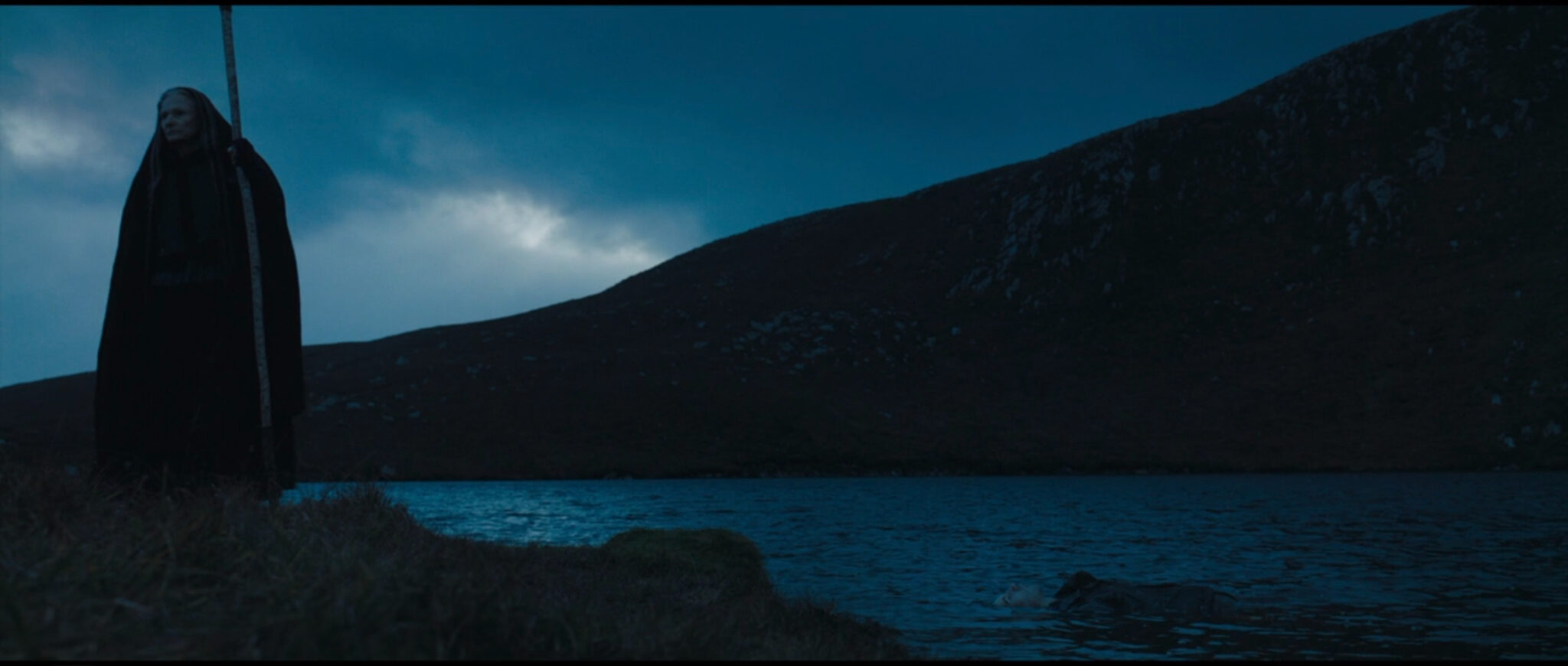
The title of Martin McDonagh’s dry and mildly horrific tale of tragic friendship may only be the name Brendan Gleeson’s Colm Doherty chooses for his musical magnum opus (based purely on its repeating “sh” sounds), but its allusion to the keening fairy woman of Irish legend conjures the mental image of that supernatural being for the viewer from the start of the film. Goading old Mrs. McCormick (Sheila Flitton) gradually seems to personify the shrieking herald of death, and as the story develops, even her ghoulish appearance evokes the folkloric form of the cloaked wretched crone – one of the three human shapes the “Bean Sídhe” typically takes (Britannica, The Irish Post). Mrs. McCormick conveys an increasing banshee-like sense of foreboding throughout the film, and imagining her as an otherworldly presence is not a stretch, particularly when she explicitly warns Pádriac (Colin Farrell) that there will be two deaths on the island before the month is out. She also seems to summon troubled young Dominic (Barry Keoghan) over Siobhán’s shoulder from across the water, prior to his unexplained death, although Siobhán (Kerry Condon) thinks the old woman is motioning toward her.
Mrs. McCormick’s most disquieting moment comes in the end, however, when she sits in the background watching Colm and Pádriac on the beach, after Pádriac sets Colm’s house on fire, with the intent to kill Colm inside. Earlier in the film, during Pádriac’s last attempt at reconciliation with his former friend, Colm ruminates on the possible existence of banshees and wonders aloud if perhaps rather than howling, they stand idly by and watch death come to pass, leaving the viewer feeling as if this is exactly what Mrs. McCormick is doing as she perches among the charred remains of Colm’s house. Fans of Banshees who enjoy McDonagh’s ambiguous use of Irish folklore in the film may be interested to explore other films in which the separation between reality and the supernatural becomes clouded.
Ondine (2009)
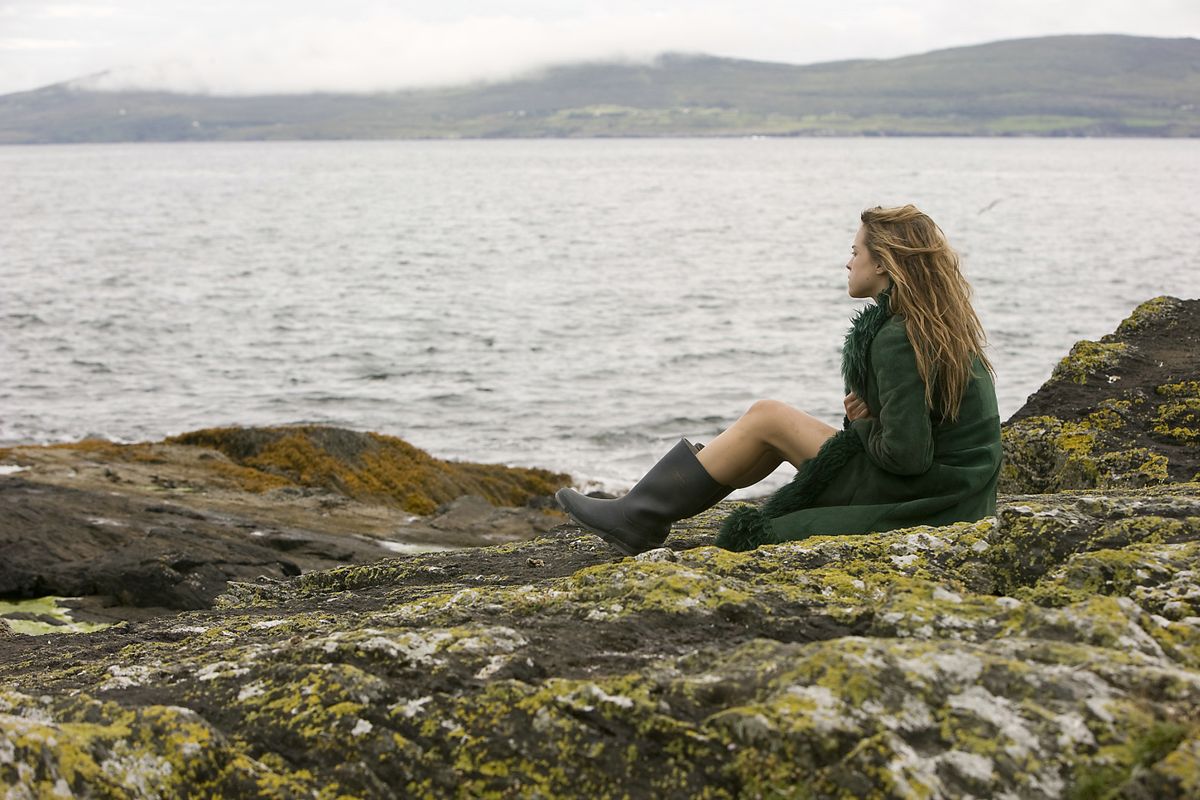
Another Irish fairy tale – albeit a decidedly more romantic one, Ondine again stars Colin Farrell as Syracuse, a divorced recovering alcoholic on the coast of Cork who pulls a drowning woman from the sea in his fishing nets and gives her asylum from the outside world at his late mother’s cottage by the water. His precocious young daughter is suffering from kidney failure and – needing something magical to find hope in – believes the woman is a selkie, a mythological being with origins in Irish and Scottish folklore. Selkies, or Seal-folk, are shapeshifters capable of transforming into humans by shedding their sealskins before coming ashore. If an ordinary human finds and hides the sealskin, the selkie must remain on land. In Irish folktales, many a marriage between man and selkie is formed this way (Wilderness Ireland). As Syracuse grows more and more attached to the mysterious woman (Alicja Bachleda), and the fear of losing her takes hold in his mind, he begins to confuse the boundaries between his daughter’s stories and the flesh-and-blood woman he loves.
“The Legend of Sleepy Hollow” from The Adventures of Ichabod and Mr. Toad (1949)
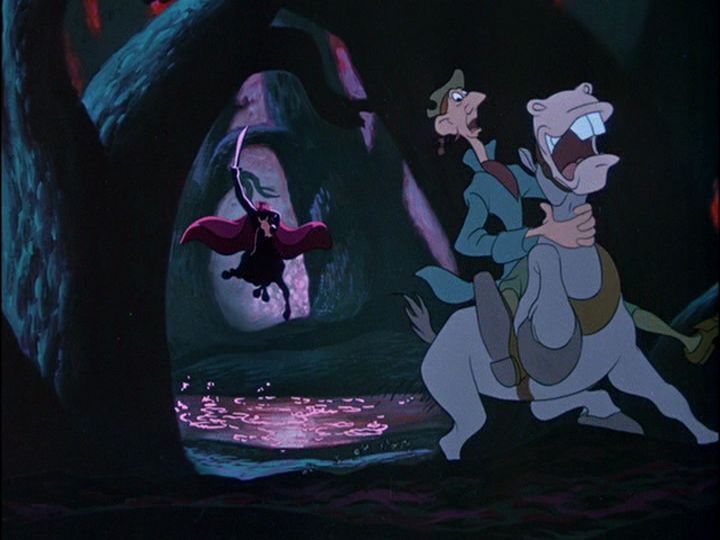
Disney’s The Adventures of Ichabod and Mr. Toad is an animated anthology film based on two famous works of literature – The Wind in the Willows and The Legend of Sleepy Hollow. Fans of Irish folklore may want to skip the former segment in favor of the latter. Bing Crosby narrates Washington Irving’s familiar American Gothic short story, and like the source material, the on-screen adaptation’s ending leaves viewers wondering which version of events is true. The lanky, opportunistic schoolmaster Ichabod Crane charms the residents of Sleepy Hollow, and vies with local boy, Brom Bones, for the affections of beautiful Katrina Van Tassel, the daughter of wealthy landowner Baltus Van Tassel. At the Van Tassel Halloween party, jealousy prompts Brom to taunt superstitious Ichabod with the tale of the legendary Headless Horseman (in song, of course, because it’s Disney). After the party, an apparently headless horseman chases Ichabod, slashing at him with his sword, until Ichabod crosses the fabled covered bridge from Brom’s song, at which point the horseman throws his flaming head at Ichabod. The next morning, villagers find Ichabod’s hat lying next to a shattered jack-o-lantern, casting doubt upon the identity of the horseman from the previous night. Rumors spread that Ichabod is alive and married to a wealthy widow in a distant county, but many in Sleepy Hollow believe he was spirited away by the Headless Horseman. The Headless Horseman is a staple in several European storytelling traditions, but the Irish Dullahan (dark man), thought to be an incarnation of the fertility god, Crom Dubh, wears flowing black robes and rides a black stallion across the countryside, carrying his decapitated head under his arm and calling the names of souls doomed to death (Irish Culture and Customs).
Pan’s Labyrinth (2006)
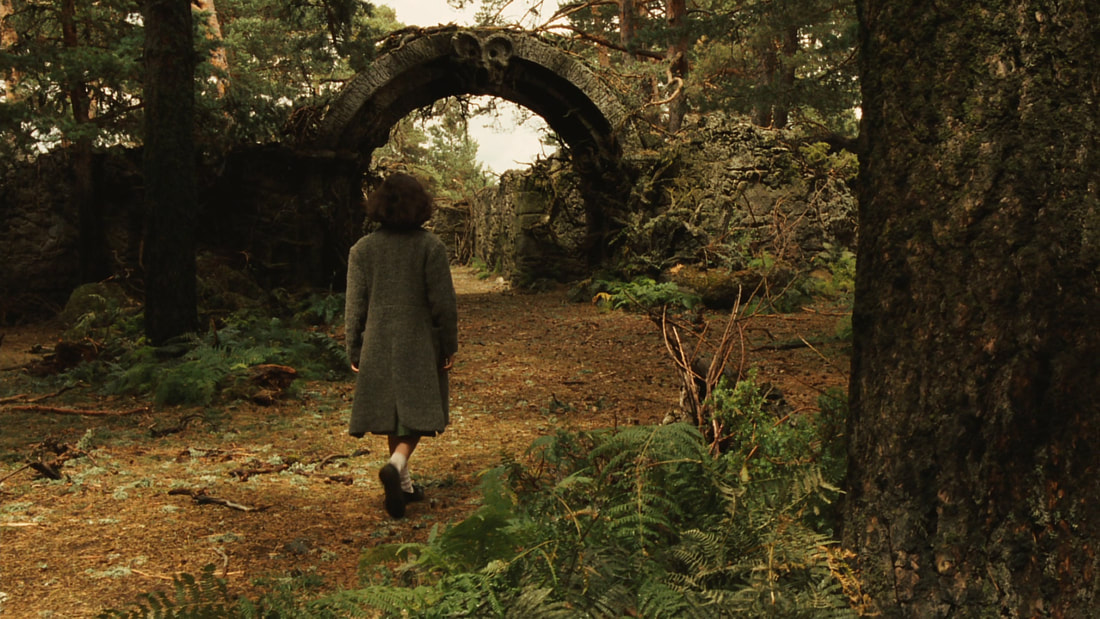
Granted, Guillermo del Toro’s fantastical dark fable shares more common ground with Greek and Roman mythology than Irish folklore. There are, however, some undeniable connections between the Underworld portrayed in the film and the Irish Otherworld (An Saol Eile). Aside from their small stature (like Irish Leprechauns/Clurichauns) and humanoid bodies (Fairies in Irish folklore can often appear in human form), the shapeshifting stick insect fairies who assist the young, imaginative protagonist, Ofelia, do not resemble any of the Irish Fairy Folk (Sidhe) aesthetically. Like the Sidhe, the fairies in Labyrinth do seem to be invisible to most people – Ofelia is the only human who can see them. She first encounters one crawling from the mouth of a statue when she ascends a raised bank on the side of the road, looking for the origin of a fragment she found, depicting a carved eye. Beyond this hill lies the ancient stone and earthen labyrinth where Ofelia meets the enigmatic Faun and where the king of the Underworld (Ofelia’s erstwhile father) has hidden one of many gateways to his realm. This portal is not unlike “the old forts and mounds, the ancient monuments built by our ancestors, which contain entrances to where the Sidhe really live – the land of Fairy, or the Fairy realm” (The Irish Pagan School).
Pan’s Labyrinth portrays parallel plotlines, between which Ofelia moves seamlessly, both as the stepdaughter of a Fascist Captain who has been assigned to hunt down republican rebels and as Princess Moanna of the Underworld, reincarnated, who must complete three tasks to prove her identity and rejoin her royal family in their realm. The viewer must contemplate whether or not the supernatural aspects of the film are actually happening, or if they are only coping mechanisms born of the young heroine’s imagination.
 J. Daugherty Nichols