The Banshees Of Inisherin And 3 More Films That Blur The Lines Between Irish Folklore And Reality

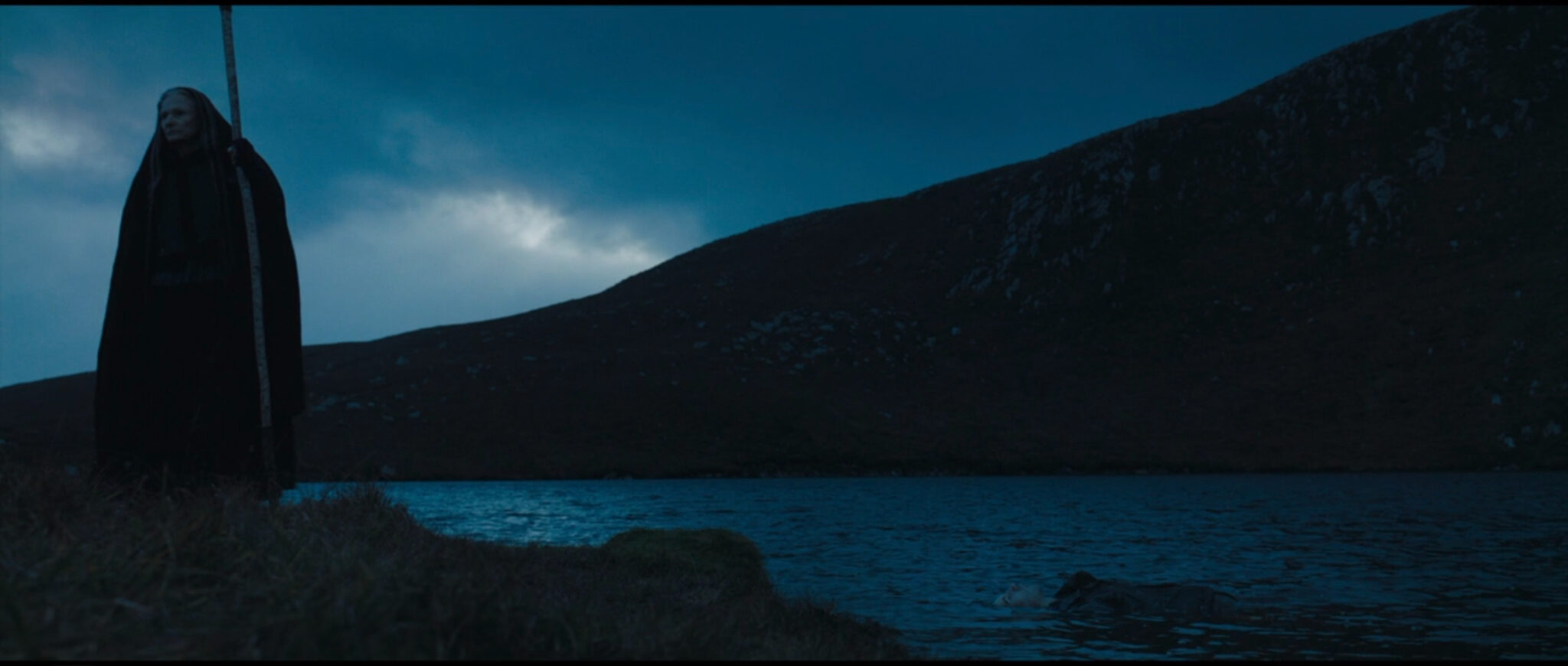
The title of Martin McDonagh’s dry and mildly horrific tale of tragic friendship may only be the name Brendan Gleeson’s Colm Doherty chooses for his musical magnum opus (based purely on its repeating “sh” sounds), but its allusion to the keening fairy woman of Irish legend conjures the mental image of that supernatural being for the viewer from the start of the film. Goading old Mrs. McCormick (Sheila Flitton) gradually seems to personify the shrieking herald of death, and as the story develops, even her ghoulish appearance evokes the folkloric form of the cloaked wretched crone – one of the three human shapes the “Bean Sídhe” typically takes (Britannica, The Irish Post). Mrs. McCormick conveys an increasing banshee-like sense of foreboding throughout the film, and imagining her as an otherworldly presence is not a stretch, particularly when she explicitly warns Pádriac (Colin Farrell) that there will be two deaths on the island before the month is out. She also seems to summon troubled young Dominic (Barry Keoghan) over Siobhán’s shoulder from across the water, prior to his unexplained death, although Siobhán (Kerry Condon) thinks the old woman is motioning toward her.

Mrs. McCormick’s most disquieting moment comes in the end, however, when she sits in the background watching Colm and Pádriac on the beach, after Pádriac sets Colm’s house on fire, with the intent to kill Colm inside. Earlier in the film, during Pádriac’s last attempt at reconciliation with his former friend, Colm ruminates on the possible existence of banshees and wonders aloud if perhaps rather than howling, they stand idly by and watch death come to pass, leaving the viewer feeling as if this is exactly what Mrs. McCormick is doing as she perches among the charred remains of Colm’s house. Fans of Banshees who enjoy McDonagh’s ambiguous use of Irish folklore in the film may be interested to explore other films in which the separation between reality and the supernatural becomes clouded.

Ondine (2009)

Another Irish fairy tale – albeit a decidedly more romantic one, Ondine again stars Colin Farrell as Syracuse, a divorced recovering alcoholic on the coast of Cork who pulls a drowning woman from the sea in his fishing nets and gives her asylum from the outside world at his late mother’s cottage by the water. His precocious young daughter is suffering from kidney failure and – needing something magical to find hope in – believes the woman is a selkie, a mythological being with origins in Irish and Scottish folklore. Selkies, or Seal-folk, are shapeshifters capable of transforming into humans by shedding their sealskins before coming ashore. If an ordinary human finds and hides the sealskin, the selkie must remain on land. In Irish folktales, many a marriage between man and selkie is formed this way (Wilderness Ireland). As Syracuse grows more and more attached to the mysterious woman (Alicja Bachleda), and the fear of losing her takes hold in his mind, he begins to confuse the boundaries between his daughter’s stories and the flesh-and-blood woman he loves.

“The Legend of Sleepy Hollow” from The Adventures of Ichabod and Mr. Toad (1949)

Disney’s The Adventures of Ichabod and Mr. Toad is an animated anthology film based on two famous works of literature – The Wind in the Willows and The Legend of Sleepy Hollow. Fans of Irish folklore may want to skip the former segment in favor of the latter. Bing Crosby narrates Washington Irving’s familiar American Gothic short story, and like the source material, the on-screen adaptation’s ending leaves viewers wondering which version of events is true. The lanky, opportunistic schoolmaster Ichabod Crane charms the residents of Sleepy Hollow, and vies with local boy, Brom Bones, for the affections of beautiful Katrina Van Tassel, the daughter of wealthy landowner Baltus Van Tassel. At the Van Tassel Halloween party, jealousy prompts Brom to taunt superstitious Ichabod with the tale of the legendary Headless Horseman (in song, of course, because it’s Disney). After the party, an apparently headless horseman chases Ichabod, slashing at him with his sword, until Ichabod crosses the fabled covered bridge from Brom’s song, at which point the horseman throws his flaming head at Ichabod. The next morning, villagers find Ichabod’s hat lying next to a shattered jack-o-lantern, casting doubt upon the identity of the horseman from the previous night. Rumors spread that Ichabod is alive and married to a wealthy widow in a distant county, but many in Sleepy Hollow believe he was spirited away by the Headless Horseman. The Headless Horseman is a staple in several European storytelling traditions, but the Irish Dullahan (dark man), thought to be an incarnation of the fertility god, Crom Dubh, wears flowing black robes and rides a black stallion across the countryside, carrying his decapitated head under his arm and calling the names of souls doomed to death (Irish Culture and Customs).

Pan’s Labyrinth (2006)
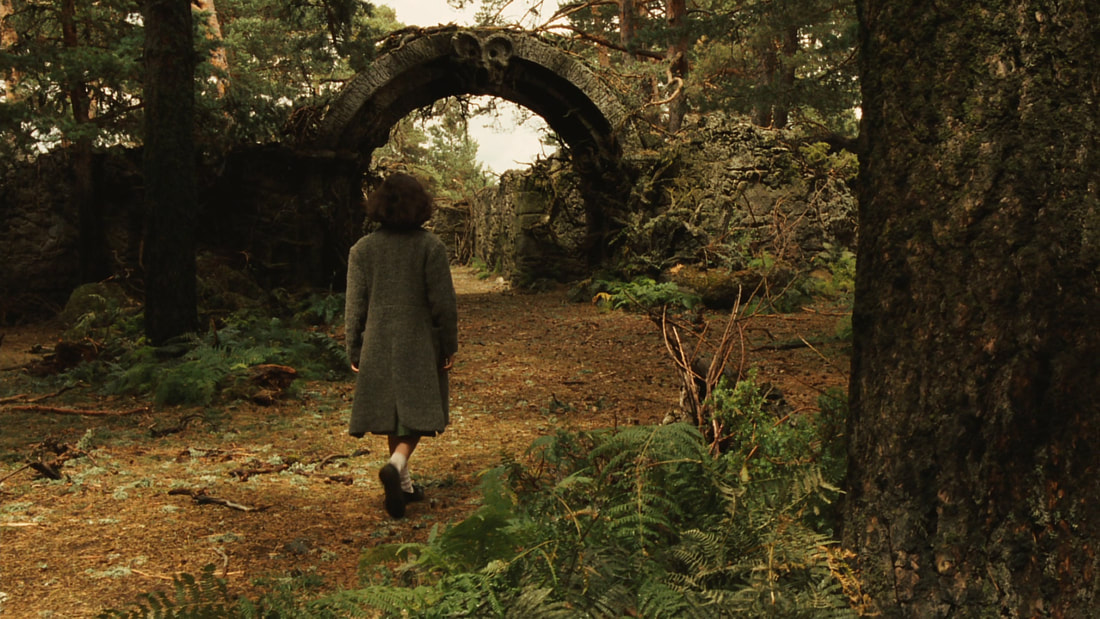
Granted, Guillermo del Toro’s fantastical dark fable shares more common ground with Greek and Roman mythology than Irish folklore. There are, however, some undeniable connections between the Underworld portrayed in the film and the Irish Otherworld (An Saol Eile). Aside from their small stature (like Irish Leprechauns/Clurichauns) and humanoid bodies (Fairies in Irish folklore can often appear in human form), the shapeshifting stick insect fairies who assist the young, imaginative protagonist, Ofelia, do not resemble any of the Irish Fairy Folk (Sidhe) aesthetically. Like the Sidhe, the fairies in Labyrinth do seem to be invisible to most people – Ofelia is the only human who can see them. She first encounters one crawling from the mouth of a statue when she ascends a raised bank on the side of the road, looking for the origin of a fragment she found, depicting a carved eye. Beyond this hill lies the ancient stone and earthen labyrinth where Ofelia meets the enigmatic Faun and where the king of the Underworld (Ofelia’s erstwhile father) has hidden one of many gateways to his realm. This portal is not unlike “the old forts and mounds, the ancient monuments built by our ancestors, which contain entrances to where the Sidhe really live – the land of Fairy, or the Fairy realm” (The Irish Pagan School).

Pan’s Labyrinth portrays parallel plotlines, between which Ofelia moves seamlessly, both as the stepdaughter of a Fascist Captain who has been assigned to hunt down republican rebels and as Princess Moanna of the Underworld, reincarnated, who must complete three tasks to prove her identity and rejoin her royal family in their realm. The viewer must contemplate whether or not the supernatural aspects of the film are actually happening, or if they are only coping mechanisms born of the young heroine’s imagination.


5 Ways to Honor the Winter Solstice with Inspiration from Nature and Tradition

The winter solstice is an astronomical event that connects us across cultural divides, and both ancient and modern celebrations honoring its arrival are prevalent around the world. It not only marks the beginning of the winter season, but the longest night of the year and the slow lengthening of sunlight in the days to come. The return of the sun is a focal point for most midwinter festivities. It is a time for leaving darkness behind and welcoming the light, both literally and metaphorically. Many people use the occasion as an opportunity to release their negative thoughts and feelings and set positive intentions for a new season. It is a largely secular holiday that is accessible to everyone and a chance to embrace our profound connection to nature and its cycles. Here are five ways to celebrate the winter solstice by observing the natural wonders of the season and by participating in rituals drawn from cultural traditions around the world.

1. Enjoy Seasonal Food and Drink

  • In Japan, many people eat kabocha squash for good luck as part of a traditional solstice practice called Toji.
  • Iranians celebrate Sheb-e Yalda by feasting on pomegranates, which are indigenous to Iran and believed to be a symbol of life and resilience, since they blossom in the harsh winter climate.
  • Dong Zhi is a Chinese winter celebration thought to mark the end of the harvest season that involves eating rice balls, known as tang yuan.
  • Ancient Roman Saturnalia and Germanic Yule both incorporated feasting into their festivities as well. The Romans ate foods that they had harvested during the autumn months, like honey and wheat, as well as dried fruits and nuts, and ancient pagans swore oaths upon the bristles of a wild boar before sacrificing and eating it.
  • The Incas made a sacred beer from fermented corn which they offered to the rising sun after three days of fasting.
  • Spiced cider, or “wassail” is a more prominently enjoyed beverage during this time of year with origins dating centuries back to pre-Christian Britain.

Prepare a winter solstice feast by borrowing from any of these rich traditions, or by simply indulging in the local fare of the season.

2. Observe a Light Ritual

  • Watch the sunrise. From Newgrange and Stonehenge in the UK to the late 18th and early 19th century Spanish mission churches in California and Latin America, to the Native American Woodhenge at the Cahokia Mounds of the Mississippi River area, people all over the globe gather to collectively revel in a rare sunrise, aligning with the features of these historical monuments for a spectacular few moments. Some, like those who celebrate Sheb-e Yalda or Soyal (the Hopi people of northern Arizona), even stay up all night awaiting the return of the sun. Whether or not the available viewing locations are designed to keep the solar calendar, watching a solstice sun rise is always a rewarding way to celebrate the event.
  • Choose a Yule log to burn in the backyard firepit or indoor fireplace or organize a bonfire. Out in the open or crackling from the hearth, fire can also bring light to any winter solstice ceremony. In Scandinavia, the St. Lucia’s Day festival honors one of the earliest Christian martyrs as a symbol of light. Lucia’s feast day blends naturally with earlier Norse solstice traditions involving the lighting of fires to ward spirits away and honor the god, Thor, who was thought to drive away frost and darkness. Girls in Scandinavia wear wreaths of candles on their heads, like the one St. Lucia wore to light her way as she delivered food to persecuted Christians hiding in Rome. Modern celebrations of Yule still often incorporate the ancient Germanic (or possibly even Celtic) practice of burning a yule log (or an entire Yule tree over the course of 12 days, as was once the custom). Traditionally, families placed a small piece of the burnt Yule log under the bed to bring good luck and protect their homes from the elements. They would then use this remaining piece to start the following year’s winter solstice fire.
  • Make lanterns or carry candles in safe holders for catching hot wax, and take a nighttime walk through the neighborhood or around the yard. Lantern walks are another form of light ritual associated with winter solstice celebrations. In Brighton, England, people march to the beach wearing costumes that represent clocks and the passage of time and carrying lanterns constructed of paper and wood for the modern-day Burning of Clocks festival. When they arrive, they burn the lanterns in a huge bonfire, where they will their wishes, hopes, and fears to pass into the flames.
  • Create a “Labyrinth of Light” with luminary bags. In Vancouver, Canada, the city’s Secret Lantern Society established a Solstice Lantern Festival, during which participants march throughout the city with lanterns they create in workshops beforehand. The festivities include fire performances and a maze of 600 candles known as the Labyrinth of Light, through which attendees can meander while contemplating thoughts and feelings they wish to leave behind and reflecting on new possibilities. 

Have fun planning meaningful ways to incorporate light into your own winter solstice traditions.

3. Use Evergreen to Build a Yule Altar or Wreath

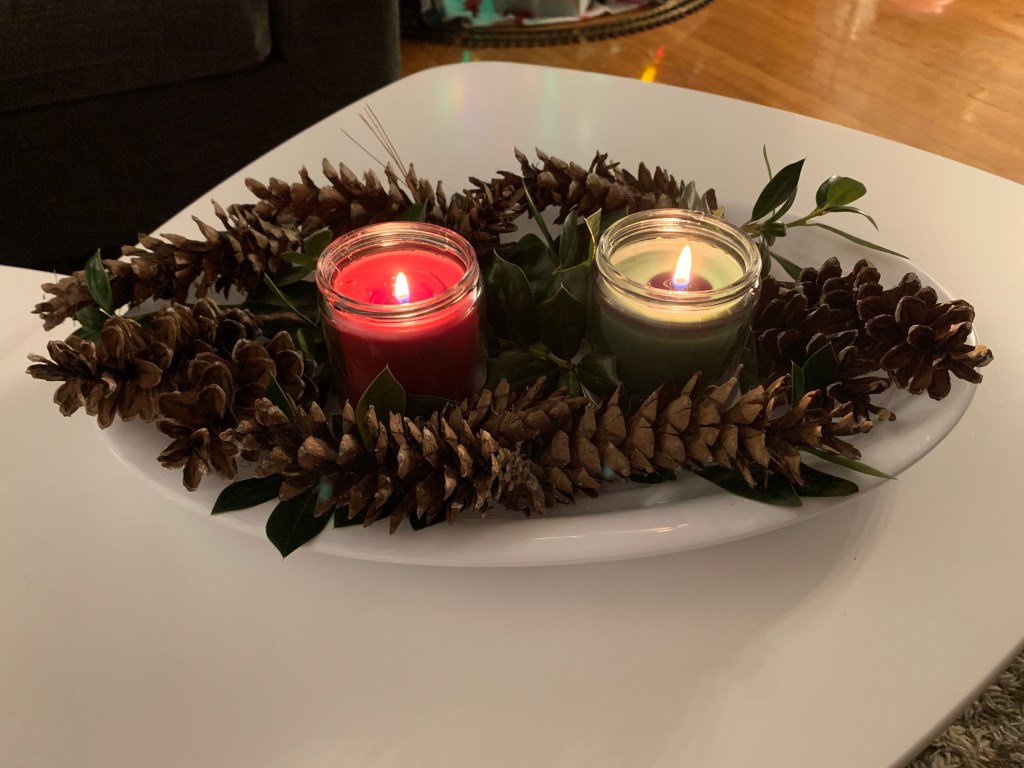
Besides being an obvious symbol of winter, the use of evergreen during winter holidays has ancient pagan roots and is associated with themes of continual life, prosperity, protection, and renewal. While hanging an evergreen wreath is a quintessential way to honor the season, try mixing it up by using the wreath as part of a yule altar. Place candles in the center of the wreath to represent the light of the sun, and add pinecones, sprigs of holly, or even mistletoe (a Celtic symbol of fertility and abundance). If wreath-making seems like a daunting task, simply arrange loose boughs of evergreen in an aesthetically pleasing way. The yule log could also serve as a base for an altar of evergreen.

4. Commune with Nature

The hunter/gatherer societies that originated many of these traditions spent most of their time outdoors, relying heavily on the cycles of the sun. Use this time to get touch with your wild roots.

  • Spend time soaking up the peaceful quiet of the winter trees and skies.
  • Take a hike in search of the sun’s elusive rays.
  • Collect pinecones, berries, and greenery for the previously mentioned evergreen arrangements.
  • At noon, the sun is directly overhead at the Tropic of Capricorn, and shadows stretch longer than they do at any other time of year. Kids, especially, might enjoy seeing how long their shadows look in the solstice sunlight.
  • Find a place that feels sacred, and be present in it, using all your senses to explore it. Bring a journal, and write down your thoughts about the experience.

5. Celebrate with Music and Language

Songs and storytelling were a part of many winter solstice celebrations, including those of the ancient Celtic and Nordic peoples, and the Indigenous people of North America. For many Native American tribes, storytelling was reserved for the winter months, since they spent the other seasons hunting, gathering, or growing food. In the Middle East, Yalda Night celebrants read poetry (especially the work of the 14th century Persian poet Hafiz) as part of their festivities.

Get creative by writing your own poetry or songs and spend some time telling stories with friends and loved ones by the fire. If you are having trouble finding your muse, try reading aloud the winter-related written works of others, or tell stories from mythology and folklore, like those of:

  • Beiwe – the Scandinavian goddess of health and fertility
  • The Cailleach – a Celtic goddess who ruled over the winds of winter
  • Grandmother Spider – a wise grandmother figure who taught the Navajo how to survive the brutal cold, stole fire for the Choctaw, and brought the sun to the Cherokee

For music, Traditional English wassailing songs are a good place to begin, but there is a plethora of recently recorded solstice music available for your exploration on any streaming service.

Personalize Your Celebration

Let this be your guide to creating your own winter solstice traditions. Have fun exploring customs from a variety of different cultures, and adopt the ones that work for you and yours. Recognize our deep connection to the rhythms and cycles of nature, and let it bring peace and comfort to your holiday season.